The Aromatherapy Shop Ltd
German Chamomile Pure Essential Oil (Origin: Nepal)
German Chamomile Pure Essential Oil (Origin: Nepal)
Couldn't load pickup availability
German Chamomile Essential Oil (Matricaria chamomilla / syn. Chamomilla recutita)
Origin: Native to Europe and western Asia, now widely cultivated across Germany, Hungary, Egypt, France, Bulgaria, and parts of South America. Germany, Hungary, and Egypt are among the most notable producers. The oil is steam-distilled from the fresh or dried flowering tops of the German chamomile plant, which belongs to the Asteraceae (daisy) family. German chamomile is distinct from English (Roman) chamomile (Chamaemelum nobile), which has a very different chemical profile and scent character. The most notable characteristic of German chamomile oil is its distinctive deep blue to inky blue colour, caused by the compound chamazulene, which is produced during the distillation process and is not present in the raw plant material. The chamazulene content can vary between batches, affecting the intensity of the blue colour. German chamomile has been one of the most widely valued aromatic plants in European traditions for centuries and has a deeply established place in perfumery and artisan fragrance work.
Scent: Rich, warm, and deeply herbaceous with a sweet, heavy, slightly fruity character. Dense and complex – there's a distinctive, inky, hay-like warmth balanced by a subtle, sweet, apple-like undertone. Faintly earthy and tobacco-like with a soft, smoky, almost leathery depth. Heavier, darker, and more intense than English chamomile, with a richer, more complex, more brooding quality. Full-bodied, dense, and remarkably long-lasting – a powerful, distinctive herbal scent that is considerably deeper and more assertive than its English counterpart. The blue colour and rich, inky character make it one of the most visually and aromatically distinctive essential oils available.
Uses:
- Valued in natural perfumery as a rich, deep, herbaceous accent – adds extraordinary depth, warmth, and a distinctive, inky, hay-like complexity to blends
- A distinctive addition to diffuser blends in small quantities, bringing a warm, rich, contemplative atmosphere to any space
- Used in candle making and soap crafting for its unique, deep, herbal character – note that the blue colour may tint products
- Blends beautifully with lavender, rose, bergamot, clary sage, geranium, frankincense, cedarwood, sandalwood, ylang ylang, and neroli oils
- Popular in artisan fragrance work for herbaceous, floral, chypre, oriental, and luxury compositions
- A powerful blending oil – a small amount adds considerable depth and complexity to any composition
- The distinctive blue colour can be used as a natural tint in artisan cosmetic and soap formulations
Important Information:
- For External Use Only
- German chamomile oil has a distinctive deep blue colour caused by chamazulene – this may stain skin, fabrics, and surfaces. Use with care
- Distinct from English (Roman) chamomile (Chamaemelum nobile), which has a very different, lighter, more fruity scent profile and chemical composition
- The botanical name has been subject to reclassification – Matricaria chamomilla and Chamomilla recutita are synonyms for the same plant. Matricaria recutita is also sometimes used.
- Individuals with known allergies to plants in the Asteraceae (daisy) family should exercise caution
- Always dilute with a suitable carrier oil before applying to skin
- Perform a patch test before use
- Consult a qualified professional before use if pregnant or nursing
- Keep out of reach of children and pets
- Store in a cool, dark place to preserve freshness – chamazulene can degrade with exposure to light and air, causing the blue colour to fade over time
- Middle note
Available in 5ml, 10ml and 30ml sizes
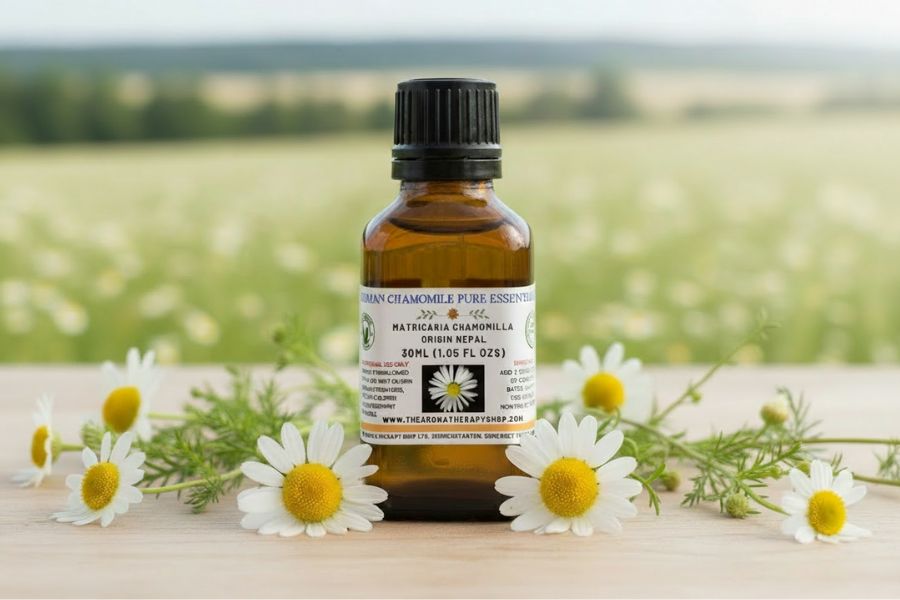
Supplied in glass amber bottles with inbuilt dropper and tamper evident cap
COA. MSDS and TDS available on request
Images are for display purposes only
Part of our proceeds go to planting native and rare or endangered trees from around the World. We now have over thirty different species including Swamp Cypress, Bristlecone Pine, Giant Redwood, Ginkgo Biloba, Scots Pine, Dawn Redwood, Colorado White Fir, Engelmann Spruce, Atlas Cedar to name but a few.